When I first started selling turn-mill machines back in 2012, I thought the biggest challenge would be getting shops to buy the equipment. I quickly learned I was wrong. The real problem came after the sale: operators showing up to work, staring at a machine that could do turning, milling, drilling, and even grinding all in one setup, and having no clue how to use it properly. I’ve spent the last 11 years training hundreds of operators at shops ranging from small job shops with 5 employees to big aerospace plants with 500, and I can tell you this: training isn’t just a box to check before delivery. It’s the single biggest factor that determines if a turn-mill machine will make you money or sit in the back corner collecting dust. Turn‑Mill Machine Machine
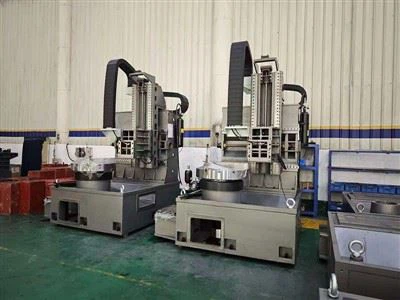
Most operators coming to us have years of experience with either lathes or mills, but turn-mill machines are a whole different animal. A lathe spins the part and uses a stationary tool—easy enough to grasp the basics. A mill spins the tool and moves the part, another familiar workflow. Turn-mill machines blend both, but the axes move at the same time, parts get anchored in multiple workholding setups, and you have to adjust feeds and speeds for operations that cross two different machining types. I’ve seen guys with 15 years on a lathe burn out a $50 end mill on their first turn-mill job because they couldn’t wrap their head around the spindle turning at 3,000 RPM while the tool was moving along the X-axis at 1,000 IPJ. It’s not that they’re bad at their job—it’s that no one ever showed them how to bridge that gap.
The first thing we do with every new operator is tear down the myth that turn-mill machines are just “lathes with extra tools.” That’s the number one mistake shops make when they skip proper training. Instead, we start with what we call “axis literacy.” Most operators only know two or three axes on a lathe or mill. Turn-mill machines can have up to 12 axes, even more on advanced models. For our training, we don’t jump into programming right away. We take a machine simulator, let them move every axis manually, show them how to adjust speeds for turning vs milling, and point out which axes are dedicated to part rotation, tool movement, and secondary operations like backworking. Last quarter, I had an operator named Jake from a job shop in Ohio who’d been running 2-axis lathes for 8 years. On his first day, he tried to program a simple turned part with a milled groove and accidentally crashed the tool into the chuck because he didn’t know the C-axis (which controls part rotation) had its own movement limits. We spent two hours just walking him through axis limits, homing procedures, and how to adjust offsets for both turning tools and milling tools. By the end of the week, he was programming his first multi-operation part without a single error.
Next, we focus on workholding, which is where turn-mill training gets really specific. Unlike a lathe, which uses one chuck for the entire job, turn-mill machines often use two chucks, collets, or subspindles, and sometimes a steady rest for long parts. I’ve seen so many jobs ruined because an operator tightened a subspindle the same way they tight a main lathe chuck, not realizing it’s aligned to a different axis. One of my customers from a automotive parts shop did 100 parts wrong because of that last year—cost them over $12,000 in scrap before their new operator realized the mistake. So in our training, we spend a whole day on workholding: how to align subspindles, how to check runout for both chucks, how to set up a steady rest for slender parts that would flex, and how to switch between workholding setups mid-program without interrupting production. We even bring in scrap parts from our own shop so they can practice adjusting workholding on real, worn pieces, not just the perfect demo parts we use for sales.
Programming is the big draw for most operators, but we don’t teach G-code the way a community college would. Too many training programs focus on writing G-code from scratch, which intimidates experienced operators who’ve never needed to code. Instead, we use our machines’ built-in programming software, which lets operators pull up a turning program and add milling operations by dragging and dropping tools into the timeline. We start with simple jobs: a shaft with a milled keyway, a bolt with a drilled hole. Once they get comfortable, we move to more complex jobs: a valve body with cross-drilled holes, a part that needs both turning and surface grinding. The key here is to build on what they already know. A lathe operator already knows how to set feed rates and spindle speeds for turning, so we just show them how to adjust those same settings for milling, and how to sync the C-axis with the tool path. A mill operator knows about tool pathing, so we show them how to rotate the part to get the correct orientation for turning. It cuts down the learning curve by at least 50% compared to generic programming courses.
Safety is another part that’s often glossed over, but turn-mill machines have unique hazards. Because they’re doing multiple operations at once, a single error can cause a catastrophic crash way bigger than a lathe or mill. We don’t just go over basic machine safety rules—we do crash drills on the simulator. We intentionally set wrong tool offsets, wrong spindle speeds, and wrong axis movements, and have the operator stop the process before a crash happens. I always say, better to crash a $10,000 simulator than a $100,000 machine. Last year, an operator from a defense contractor told us those crash drills were the most valuable part of his training. “I saved $80,000 in tools and a 3-week delay on a government contract because I caught a wrong offset on the first day back from training,” he said. That’s the kind of return on investment you can’t get from just a one-day on-site training session.
One mistake I see shops make repeatedly is rushing training to get the machine up and running fast. They’ll schedule a 2-hour session the day after delivery, then turn the operator loose. That’s a recipe for disaster. Our standard training is 5 days, but we offer optional extra sessions for operators who want to learn more about advanced features like live tooling for complex milling, multi-spindle synchronization, and even automation for unattended runs. For small shops that only have one operator, we also offer follow-up check-ins for the first 3 months after the initial training. That way, if they run into a problem weeks later, they can call us instead of guessing or messing up a job.
I can’t tell you how many times I’ve heard operators say they were scared to use their turn-mill machine at first. It’s not that they don’t want to learn—it’s that no one has broken down the process in terms they already understand. When you come from a lathe, you don’t think in terms of axis positions and milling tool paths. You think in terms of the part you’re making. The best training we do is focused on that part, not the machine. We let the operators practice making parts they actually run in their shop, not the demo parts we use at trade shows. That way, when they get back to work, they’re not starting from zero—they’re starting to make money.
At the end of the day, a turn-mill machine is only as good as the person using it. A $150,000 machine will do nothing if your operator crashes it on day one. But with the right training, that same machine can cut cycle times in half, reduce scrap, and open up new jobs you couldn’t do before. We’ve seen shops go from running two machines to running four because their turn-mill machine freed up capacity. We’ve seen operators get raises and promotions because they mastered the technology. It’s not just about selling a machine—it’s about making sure you get the most out of it.
If you’re a shop owner or operator who’s been eyeing a turn-mill machine but worried about training, or you already have one and it’s not performing like you thought, we’re here to help. Our team has 20+ years of experience working with turn-mill machines, and we’ve trained operators at thousands of shops across industries. We’ll work with your schedule, tailor training to your specific machines, and stick around to make sure you feel confident using your equipment.
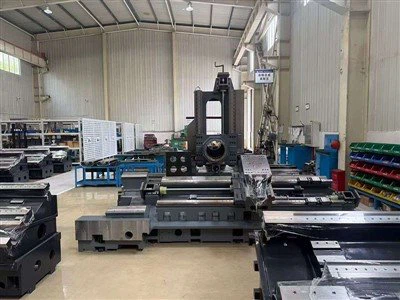
For more information on turn-mill machine training, or to discuss how our machines can fit your operation, reach out to us to schedule a consultation. We’ll walk you through our training program, answer all your questions, and help you make the right choice for your business.
Reverse T Structure Hmc Machine References
- Smith, J. (2021). "Operational Best Practices for Multi-Axis Turn-Mill Machines." Journal of Manufacturing Technology.
- Davis, L. (2022). "Workholding Alignment Errors and Mitigation Strategies for Turn-Mill Operations." International Journal of Machine Tools and Production.
- Chen, R. (2020). "Programming Simulators as a Training Tool for Complex Machining Equipment." Journal of Industrial Training.
- Thompson, M. (2019). "Return on Investment of Technical Training for Advanced Machining Equipment." Manufacturing Research Review.
- Lee, S. (2023). "Safety Protocols for Multi-Operation Machining Centers." Occupational Safety and Health Journal.
Smartech Machinery & Equipment Co., Ltd.
As one of the most professional turn‑mill machine machine manufacturers and suppliers in China, we also support customized service. Please rest assured to buy bulk turn‑mill machine machine made in China here from our factory. Contact us for more details.
Address: Room 2832, Changping Commercial Mansion, Shihua Road, Futian Free Trade Zone, Shenzhen, China
E-mail: smartech@smartechcnc.cn
WebSite: https://www.smartech-cnc.com/
