If you’ve spent any time in industrial material processing, heat treatment, or R&D labs, you’ve probably encountered a hood furnace at some point. These workhorses—characterized by their enclosed, top-mounted heating hoods and flexible internal spaces—are designed for tasks ranging from sintering small metal parts to drying ceramic greenware. As a hood furnace supplier, I field one question more than any other: “Can I use my hood furnace for distillation?” It’s a fair question, too, because the lines between heat-based processes can blur, and distillation’s core goal—separating liquids based on boiling point—feels similar enough to hood furnaces’ core function of applying controlled, uniform heat. The short answer is: yes, but with critical caveats that separate successful distillation runs from safety hazards and ruined equipment. Let’s break this down, starting with how hood furnaces work, then mapping that to distillation requirements, and finally what that means for your operations. Hood Furnace
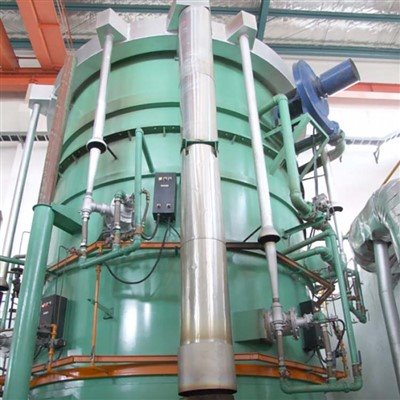
First, let’s get clear on the two technologies’ core mechanics, because that’s where the confusion starts. A standard hood furnace (also called a top-loading furnace or box furnace with a hinged hood) operates by heating an insulated chamber via heating elements mounted on the ceiling, side walls, or base of that hood. Air or inert gas fills the chamber, and heat transfers to whatever you’re processing via convection, conduction, or radiation. Temperatures are tightly controlled, often ranging from 100°C to over 1,700°C, with programmable controllers to hold steady heat for hours or days. They’re built for processes where you keep materials inside the chamber—sintering, annealing, calcining, even melting small batches of glass.
Distillation, by contrast, is all about moving materials. The process relies on heating a liquid mixture until the lower-boiling component vaporizes, then channeling that vapor to a cooler surface where it condenses back into a pure liquid, separate from the remaining higher-boiling residue. That means distillation needs three non-negotiable components: a controlled heat source for the boiling flask, a sealed path for vapor to travel, a cooled condenser, and a way to collect the distillate. Standard lab distillation setups use round-bottom flasks, heating mantles, distillation heads, Liebig condensers, and collection flasks—all connected in an airtight (or semi-airtight) line to prevent vapor loss. Industrial distillation often uses larger columns and continuous feed systems, but the core flow is the same: heat → vaporize → collect.
So why would someone think a hood furnace works for this? The parallel is that hood furnaces can apply consistent heat at temperatures relevant for many distillation tasks—especially low-boiling liquids like ethanol, solvents used in pharmaceuticals, or certain hydrocarbon fractions. For example, ethanol boils at 78.37°C, so a hood furnace set to 85°C would provide steady, controlled heat to a flask sitting inside its chamber. That makes it tempting to repurpose existing equipment instead of investing in a dedicated distillation unit, right? But here’s the catch: standard hood furnaces are not designed with the safety and functionality features that make distillation work—let alone work safely.
Let’s start with the biggest functional gap: vapor containment and routing. A hood furnace’s chamber is built to hold solid or liquid materials in a static space, not to channel vapor to an external condenser. If you stick a distillation flask inside a standard hood furnace, the vapor it produces will fill the entire chamber, not flow out to a cooled surface. That means you’ll get no distillate, because the vapor has nowhere to condense except on the cool walls of the furnace chamber—where it will leave residue, corrode heating elements, or even cause a pressure buildup if the vapor is flammable or toxic. For example, if you’re distilling a flammable solvent like hexane, that pressure buildup could rupture the flask, send vapor into the furnace’s control panel, and create a fire hazard.
Next, temperature control precision. While hood furnaces can hold consistent heat, they’re often calibrated for bulk heating, not the gradual, precise heating needed for distillation. Many lab-scale hood furnaces have a temperature reading that measures the air in the chamber, not the actual temperature of the flask’s liquid. That means if you set the furnace to 80°C, the liquid inside your flask might be 10 or 15°C warmer, pushing it well past its boiling point, leading to bumping (sudden, violent boiling that can shoot liquid into the vapor line, or even break the flask). Industrial hood furnaces are even less precise for small, localized heat applications, since their heating elements are designed to heat a large chamber, not a single flask.
Then there’s safety. Distillation often involves flammable, toxic, or corrosive materials—none of which play nice with standard hood furnace design. Most hood furnaces have openings only for loading and unloading, and their electrical components (thermocouples, control boards, power cords) are not sealed to prevent exposure to fumes. If you’re distilling acidic solvents, for example, fumes will eat through wiring over time, leading to short circuits. Flammable vapors can ignite if they come into contact with hot heating elements, or build up in the insulated chamber and cause an explosion. Even water-based distillation can damage a hood furnace: if you let liquid residue dry on heating elements, it can create hot spots that shorten the furnace’s lifespan drastically.
Wait, but is there a way to make this work? As a hood furnace supplier, I’ve worked with a handful of R&D labs and small manufacturers who wanted to repurpose their existing equipment for small-batch distillation, and there are modified hood furnace setups that do work—for specific, low-risk applications. These aren’t off-the-shelf hood furnaces, though; they’re custom-built with distillation-specific modifications. Let’s walk through what that setup looks like, because it’s a solution we’ve helped our customers implement successfully.
First, you need a modified hood furnace with a sealed, feed-through port. Instead of a solid back or side wall, the furnace has a precision-machined, airtight port that’s sized to fit a distillation flask’s neck. This port is lined with a high-temperature, chemical-resistant seal (like Kalrez or Viton, which stand up to most solvents and acids) to prevent vapor from leaking out. Next, you need to mount the distillation flask securely inside the furnace chamber, positioned so that the neck lines up exactly with the feed-through port. The flask is sealed to the port with a custom-fitted adapter, so the only path for vapor is through the port and out to an external condenser.
Second, you need independent temperature monitoring for the flask, not just the chamber. Instead of relying on the furnace’s built-in thermocouple to measure chamber air, install a small, high-temperature thermocouple directly inserted into the distillation liquid. This lets you adjust the furnace’s heat in real time to hit the exact boiling point of your target component, preventing overheating and bumping. We often recommend PID (proportional-integral-derivative) temperature controllers for these setups, since they can adjust heat output smoothly to maintain a steady liquid temperature—critical for separation.
Third, you need fume management, not just the furnace’s hood. Wait, right—most of us are familiar with lab fume hoods that vent fumes outside, but when you’re using a hood furnace for distillation, the furnace itself is your enclosed heating space, so you need a secondary vent system. The modified furnace has a vapor outlet port that connects to a fume extractor, which pulls any stray vapors away from the furnace’s electrical components and routes them through a carbon filter or scrubber before venting. For flammable materials, we add a flame arrestor to the vent line, to prevent any backflash into the chamber.
The key here is that this modified setup only works for small-batch distillation—usually 5 liters or less, for lab or pilot-scale use. It’s not for large industrial distillation runs, which need dedicated continuous distillation columns. And it’s only suitable for materials that are not highly corrosive or reactive with furnace components; for example, distilling ethanol or mineral spirits works well, but distilling strong acids or solvents that can eat through the Kalrez seal is not advisable.
Now, when is this modified setup worth it, and when is it better to invest in a dedicated distillation unit? That’s the question every customer needs to answer for their operation. If you’re a small R&D lab testing a new extraction method with a small batch of non-hazardous solvent, a modified hood furnace might save you the cost of a separate distillation system. But if you’re processing high volumes, or working with toxic, flammable, or highly corrosive materials, a dedicated distillation unit is non-negotiable. Dedicated distillation setups are built specifically for vapor routing, condensation, and fume control, so they’re safer, more efficient, and produce purer distillate than a modified hood furnace.
As a supplier, I want to be clear: I’m not here to talk you out of repurposing a hood furnace, but to make sure you do it safely. I’ve seen customers skip the modifications, jam a flask into a standard furnace, and end up with ruined equipment, lost product, or even a small fire. That’s why we offer custom hood furnace retrofits for distillation—we work with each customer to design a setup that fits their specific application, whether that’s low-temperature solvent distillation for a pharmaceutical lab or small-scale oil refining for a research facility.
Let’s also address a common misconception: some people think any enclosed heat chamber can do distillation, but the devil is in the details. For example, a muffle furnace (another type of high-heat furnace, often used for ashing materials) is even worse for distillation—its chamber is fully sealed, with no feed-through ports, so you’d have to cut a hole in it, which compromises its structural integrity and warranty. Tube furnaces, on the other hand, have a long, tubular chamber that can be used for distillation if you fit it with the right fittings, but they’re only for very small batches, and not for liquids that foam or boil vigorously.
What about maintenance? If you do use a modified hood furnace for distillation, you’ll need to do more frequent maintenance than a standard furnace. After each run, you have to clean all residues from the feed-through port, seal, and vent line—any leftover solvent or distillate can eat through the seal over time, leading to leaks. You’ll also need to check the flask thermocouple regularly for drift, since it’s exposed to chemical fumes and high heat. And for safety, we recommend installing gas detectors in the area around the furnace, to alert you if flammable or toxic vapors are building up.
At the end of the day, the answer to “Can a hood furnace be used for distillation?” is a qualified yes—if you’re willing to invest in custom modifications, follow strict safety protocols, and stick to small-batch, low-risk applications. But for most operations, a dedicated distillation system is the smarter, safer choice. If you’re considering either option, whether you’re looking to retrofit an existing hood furnace or start from scratch with a dedicated unit, I’m here to help. We work with labs, manufacturers, and research facilities to design heat processing and distillation solutions that meet their exact needs, with no one-size-fits-all promises.
If you’re ready to discuss your specific application, reach out to our team to talk through what’s possible for your operations. We can walk through the pros and cons of modified hood furnace setups vs. dedicated distillation units, help you identify the right equipment for your batch size and materials, and make sure your process is safe and efficient from start to finish.
Hood Furnace References
Perry, J. H. (1997). Perry’s Chemical Engineers’ Handbook (7th ed.). McGraw-Hill.
Davis, M. E., & Davis, R. J. (2012). Fundamentals of Chemical Reaction Engineering. Pearson.
ASTM International. (2020). Standard Practice for Operating Laboratory Furnaces (E1159-20). ASTM.
Danyang Dingfeng Industrial Furnace Co., Ltd.
Danyang Dingfeng Industrial Furnace Co., Ltd. is one of the most experienced hood furnace manufacturers and suppliers in China, also supports customized service with low price. Please feel free to wholesale high quality hood furnace made in China here from our factory. For pricelist, contact us now.
Address: Lizhuang Economic Development Zone, Danyang City
E-mail: saleszk@dffurnace.com
WebSite: https://www.dffurnace.com/
