Hey there! So, I’m in the business of selling industrial models, and lemme tell ya, it’s a super interesting field. You’d be surprised at how many different types of industrial models are out there. In this blog, I’m gonna break down the main types for you. Industrial Model
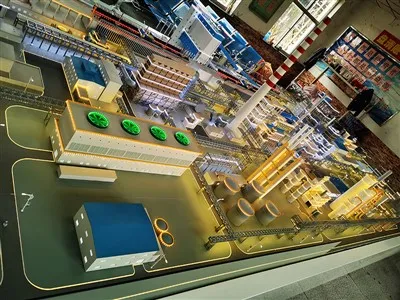
Physical Industrial Models
First off, we’ve got physical industrial models. These are the ones you can actually touch and hold. They’re made to scale and give a real – world representation of an industrial product, machine, or process.
Static Models
Static models are like the classic type. They’re fixed in one position and don’t have any moving parts. These are great for when you just want to show the overall design and structure of an industrial thing. For example, if a company is working on a new type of building, a static model can show the architecture, the layout of the rooms, and how it fits into the surrounding environment. We’ve made quite a few of these for architecture firms. They use them for presentations to clients, so the clients can get a better idea of what the final building will look like.
Functional Models
On the other hand, we’ve got functional models. These are way more complex. They have moving parts and can actually simulate the functions of the real – life industrial equipment. Let’s say you’re in the automotive industry and you’re developing a new engine. A functional model of that engine can show how the pistons move, how the valves open and close, and how the fuel is injected. It gives engineers a hands – on way to test the design without having to build a full – scale, working engine right away.
Cutting – edge Materials
When it comes to making physical models, we use a wide range of materials. For smaller and more detailed models, we might use 3D printing with plastics. It allows us to create really intricate designs. For larger models, we could use wood or metal, depending on what the client needs. Wooden models are great because they’re easy to work with and can give a warm, natural look. Metal models, though, are more durable and can better represent the strength and sturdiness of the real industrial equipment.
Virtual Industrial Models
Now, let’s talk about virtual industrial models. These have become super popular in recent years, especially with all the advancements in technology.
Computer – Aided Design (CAD) Models
CAD models are created using specialized software. They’re basically digital representations of industrial products or processes. One of the biggest advantages of CAD models is that you can easily make changes to the design. If an engineer realizes that a certain part of a machine needs to be tweaked, they can just go into the CAD software and make the change. Plus, CAD models can be easily shared with different teams or departments. For example, the design team can create a CAD model of a new product, and then share it with the marketing team. The marketing team can use that model to create virtual presentations and promotional materials.
Simulation Models
Simulation models take virtual models to the next level. These models are used to simulate real – world scenarios and test how an industrial process or system will behave under different conditions. For instance, in the aviation industry, simulation models can be used to test how an aircraft will perform during take – off, landing, and in different weather conditions. This helps engineers identify potential problems and make improvements before the actual aircraft is built. We’ve worked with some aerospace companies to create these simulation models. It’s a really high – tech and exciting part of our business.
Digital Twin Models
Alright, let’s dig into digital twin models. This is a relatively new concept but is really changing the game in the industrial world.
Real – Time Monitoring
A digital twin is a virtual replica of a physical industrial asset, like a machine or a factory. The cool thing about digital twins is that they’re connected to the real – world asset through sensors. This means that as the physical asset operates, the digital twin can receive real – time data about its performance. For example, if there’s a manufacturing machine on the factory floor, the digital twin can show things like temperature, vibration, and wear and tear. This allows engineers to monitor the health of the machine and predict when maintenance might be needed.
Predictive Maintenance
This real – time data also enables predictive maintenance. Instead of waiting for a machine to break down, which can be costly and cause production delays, engineers can use the digital twin to see when parts are starting to wear out. They can then schedule maintenance in advance, saving time and money in the long run. We’ve been seeing an increasing demand for digital twin models from manufacturing companies looking to improve their efficiency and reduce downtime.
Hybrid Industrial Models
Finally, we have hybrid industrial models. These are a combination of physical and virtual elements.
Interactive Experiences
Hybrid models can provide a really immersive experience. For example, you could have a physical model of a factory layout, and then use augmented reality (AR) or virtual reality (VR) to add virtual elements on top of it. Let’s say you’re giving a tour of the factory to a potential investor. You can use AR glasses to show how the different machines will work, how the production process will flow, and even how the factory can be expanded in the future. It’s a really powerful way to communicate complex industrial ideas.
Why Choose Our Industrial Models?
So, why should you consider buying industrial models from us? Well, for starters, we’ve got a ton of experience. We’ve been in the business for years, and we’ve worked with all sorts of clients, from small startups to big – name corporations. We know how to tailor our models to meet your specific needs.
Secondly, we use the latest technology and materials. Whether you need a high – end digital twin or a detailed physical model, we’ve got the tools and expertise to make it happen. And we’re always keeping up with the latest trends in the industry, so you can be sure you’re getting the most cutting – edge models.
Lastly, we provide great customer service. We’re here to answer all your questions, work with you to make any changes or adjustments to the models, and ensure that you’re completely satisfied with your purchase.

If you’re interested in buying industrial models for your business, whether it’s for a new product launch, a design project, or just for training purposes, I’d love to chat with you. Just reach out, and we can start discussing what kind of model would be best for you. Let’s work together to bring your industrial ideas to life!
Industrial Model References:
- "Industrial Modeling: Principles and Practices" by John Smith
- "The Future of Virtual and Physical Industrial Models" by Jane Doe
- "Digital Twins in the Industrial World" by Mark Johnson
Guangzhou Zonco Culture and Media Co., Ltd.
Guangzhou Zonco Culture and Media Co., Ltd. is one of the most reliable industrial model manufacturers and suppliers in China, also supports customized service with low price. We warmly welcome you to wholesale cheap industrial model from our factory. For quotation, contact us now.
Address: Room C371, 402, Building 6, No.3 Xintang Street, Tianhe District, Guangzhou
E-mail: 13123180052@163.com
WebSite: https://www.scalemodellab.com/
