Hey there,
I’m Jake, and I run a small but punchy instrument panel systems supply company—we don’t do generic “one-size-fits-all” garbage, which means every single dash system we ship has to pass more checks than a new driver’s road test. If you’re in the auto industry, you know: if your dash fails, you’re looking at recalls, warranty nightmares, and angry dealerships that won’t return your calls. That’s why our testing process isn’t some vague “quality check” — it’s a 3-stage deep dive that starts the second a raw part hits our warehouse and doesn’t stop until it’s on a truck headed to the customer. Let’s break this down like we talk in our production floor huddles—no stuffy engineering jargon, just real, messy, necessary work. Instrument Panel Systems
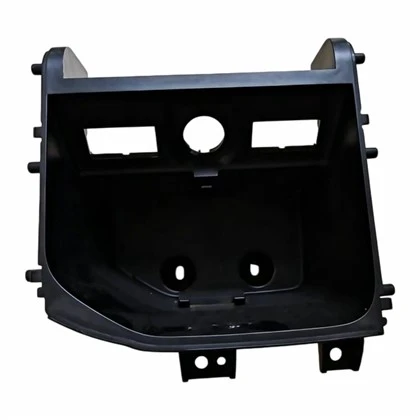
First off, the incoming parts check. I see a lot of suppliers cut corners here, and that’s how you get a dash that rattles before the car even hits 10 mph. Every plastic, wire, screw, and infotainment module that shows up at our door doesn’t just get unboxed and stuffed in a bin. Our lead tech, Mia, runs a quick “look and poke” first—she’s got 12 years in the game, so she can spot a tiny scratch in a molded plastic surface (the kind that’ll catch sunlight and annoy a driver every commute) or a wire that’s frayed at the crimp in 10 seconds flat. But that’s just the warm-up. We also pull 5% of every shipment for a 24-hour humidity and temperature stress test—we stick those parts in a chamber that swings from -40°F to 180°F, because if a dash is going to be installed in a truck for off-roading in Arizona or a sedan driving through a Canadian winter, it needs to not crack or turn sticky. Last month, a vendor sent us plastic trim that melted a little in this test—we sent the whole shipment back, no exceptions. I don’t care if they’re our go-to; garbage in, garbage out.
Once all the parts pass incoming, we move to in-process testing—this is where we catch mistakes before they get glued or screwed into a full dash, which saves us thousands in rework. Every wire harness gets a continuity check: we plug it into a tester that zaps each circuit and makes sure nothing is broken or shorting. If a wire for the turn signal doesn’t connect, we pull it out and redo the crimp before we even touch the plastic. Then, when we start assembling the dash, we have a dedicated line for fit checks. We use actual car door frames and center console inserts to make sure the dash fits exactly right—no gaps bigger than a credit card, because drivers hate that, and dealers will send it back. Last week, an intern mixed up two different trim sizes for a pickup truck dash; our fit check guy, Rico, caught it before we glued anything, and we fixed it in 10 minutes instead of having to tear apart 20 dashes later. That’s the stuff no one sees, but it’s what keeps our turnaround times fast.
Now, the big one: final unit testing. This is where every assembled dash goes through a full “simulated drive” before it leaves our facility. We don’t just turn on the screen and call it good. First, we do what we call a power cycle test: we turn the ignition on and off 100 times in a row, over 24 hours, to make sure the infotainment, gauges, and climate control don’t freeze up or die. We’ve had instances where a cheap circuit board would fail after 50 cycles— those get flagged and sent back to the electronics team, not to the customer. Next up is the water spray test: we blast a steady stream of water over the dash and the edges where it meets the windshield and door panels, because leaks in a dash can mess with the wiring and cause electrical fires. It’s rare, but we’ve had a bad seal on a plastic part once, and we fixed it before it got to a plant.
The part everyone cares about the most, though, is the functionality of the gauges and displays. We plug each dash into a simulator that mimics a car’s speed, RPM, and fuel levels—we crank the speed from 0 to 120 mph, make the fuel tank go from full to empty, and check that the check engine light comes on when it’s supposed to. We even test the backlighting, because no one wants to squint at their gauges on a dark highway. And if it’s a dash with a touchscreen? We run a 48-hour “touch test” where we tap every icon, swipe every screen, and rotate every button thousands of times to make sure it doesn’t wear out. We had one batch of screens that started lagging after a week of use in the simulator—we swapped the screen supplier, and haven’t had an issue since.
Wait, I should also mention our post-shipping follow-up. Testing doesn’t end when the truck leaves our lot. Every quarter, we get data from our customers—car manufacturers—and we track any issues that pop up in the first 30 days of use. If a dash has a rattling speaker or a gauge that’s off, we go back and figure out why it slipped through our checks. Last year, a small batch of dashes had a loose glove box latch—turns out the screws we used had a slightly wrong thread count. We caught that early, fixed the batch, and made a change to our screw vendor specs to make sure it never happens again. That’s the beauty of real testing: it’s a loop, not a one-and-done.
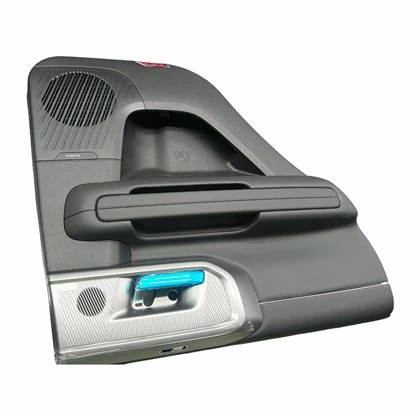
I know a lot of suppliers act like testing is just a box to check for ISO standards, but for us? It’s how we keep our customers coming back. A car manufacturer can’t afford a delayed shipment because a dash is faulty, and we can’t afford the bad rep. If you’re looking for a reliable instrument panel systems supplier that actually tests every unit, doesn’t cut corners, and will work with you to fix any issues, hit us up to connect and chat about your project. We’re here to make your dash quality is something you can count on, no hassle.
Rear Spoiler Systems References:
- Automotive News. (2022). The Hidden Costs of Instrument Panel Quality Failures.
- SAE International. (2021). Standard Practices for Electrical Component Environmental Testing in Light Vehicles.
- Global Automotive Manufacturing Report. (2023). Incoming Part Quality Checks for Assembly Line Efficiency.
Hebei Xiujie Auto Parts Co., Ltd.
As one of the most professional instrument panel systems manufacturers and suppliers in China, we have world-leading production equipment and strong manufacturing capabilities. Please feel free to wholesale bulk customized instrument panel systems from our factory. Contact us for quotation and free sample.
Address: Industrial New Area, Wen’an County, Langfang City, Hebei Province (State-run Xiaowu Farm)
E-mail: runtaoli87@gmail.com
WebSite: https://www.xiujie-cn.com/
