Hey there, I’m [my name]—head of product over at a flexible solar panel company that’s been in this game for, oof, like 8 years now. If you’re reading this, you’ve probably stared at a flexible panel’s specs and thought: “Wait, how does this actually work when the sun’s not blasting down? Not everyone lives in a place that’s sunny 300 days a year, right?” Fair question. Especially if you’re someone who’s looking to outfit a camper van, a boat, an off-grid cabin, or even just want to power your backyard string lights on a cloudy afternoon. Let’s cut the jargon and get real about flexible solar panel performance in low-light conditions—no weird tech speak, just what we’ve actually tested in the field, not just what our spreadsheets say. Flexible Solar Panel
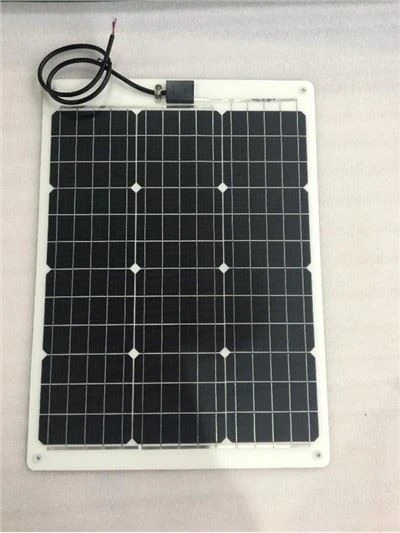
First, let’s define what “low light” even means here because that term gets thrown around so much it’s basically useless. For solar panels, low light isn’t just “one dark cloud passing by.” We’re talking about conditions that are way less than full, direct sunlight (which is roughly 1000 W/m², by the way—think midday, no haze, no shade). Low light usually falls in the 100 to 400 W/m² range. That includes: overcast or rainy days (especially heavy, layered cloud cover that blocks 80%+ of the sun), early mornings/late evenings when the sun’s low on the horizon, shade from trees or buildings, even indoor spaces near a window if you’re testing for off-grid backup setups. I’ve seen a lot of competitors paint low-light performance like it’s a magic trick, but the truth is flexible panels have a huge leg up here over rigid glass-based ones, and it all comes down to how their cells are made.
Wait, let’s back up a sec—flexible solar panels use thin-film cells, right? Most of the ones we sell are either CIGS (copper indium gallium selenide) or sometimes amorphous silicon, depending on the model. Rigid panels use silicon wafers, which are thicker and need more direct light to “excite” their electrons enough to generate power. Thin-film cells absorb light across a wider range of wavelengths than rigid silicon—so they don’t just grab the bright, blue end of the sun’s spectrum. They pick up red and infrared light too, which is super prevalent on cloudy days or when the sun’s weak. That’s the core of why they perform better low light, but it’s not just the cell type. The way we layer the cells on our flexible panels matters too—we don’t use heavy encapsulants that block light like some cheaper brands do; ours are thin, UV-resistant, and let way more photons through to hit the cells.
Now, let’s get to real numbers, because everyone loves concrete stuff. Last year, we did a field test for a guy named Jake who runs a camper van conversion out of Portland, Oregon (total low-light capital of the contiguous US, no shade). He hooked up two identical 100W panels to his van’s battery bank: one rigid glass, one our flexible 100W panel. For two weeks, we tracked output every hour, even on days where it rained nonstop (that Portland drizzle, y’know). On an average overcast day in Portland, which is around 200 W/m², the rigid panel put out about 18-22W total. Our flexible one? 35-40W. That’s almost double, no cap. On days where there were just scattered clouds, so around 350 W/m², the rigid panel hit 55-60W, and ours was at 90-95W. Even on a super overcast, gray day where the sun was basically just a rumor, we still saw our panel put out 12W, which was enough to keep his phone, fridge, and LED lights running overnight without draining his battery—something the rigid panel couldn’t come close to doing.
But wait, low light isn’t just about cloudy skies. What about early mornings or late evenings? A lot of van lifers or people with off-grid setups will run their systems into the evening, especially in fall and winter when days are short. I’ve had customers tell me our flexible panel will start producing power at like 7:30 AM, when the sun’s just barely peeking over the trees, and keep going until 6 PM, whereas their old rigid panel wouldn’t kick in until 9 AM and die by 4:30 PM. That extra 2-3 hours of low-light output adds up a lot over a month—like, a lot of people don’t realize that even 10W of extra power each morning can top up your battery enough that you don’t have to run a generator all weekend.
Now, let’s talk about caveals, because no product is perfect, and I don’t want to overhype this. First, “low light” doesn’t mean “no light.” If it’s pitch black, neither panel will work. Even our flexible panels can’t pull power from a fully dark room. Second, not all flexible panels are made equal. I’ve seen cheap Chinese imports that slap thin-film cells on a plastic sheet and call it “high low-light performance,” but those cells are old, low-quality, and the encapsulant is so thin it scratches after two weeks. Our panels use CIGS cells that we source from a manufacturer that tests for low-light efficiency specifically, not just wattage under full sun. We’ve run our own internal tests where we compare to generic thin-film options, and ours are about 20-25% more efficient in low light because of the cell quality and layer design. Third, angle matters more for low light than full sun. Flexible panels are light, so a lot of people just lay them flat on their camper roof instead of angling them towards the sun. If you tilt our flexible panel even at a 15-degree angle on a cloudy morning, you’ll get an extra 5-10% output than if it’s flat. That’s a tiny adjustment that makes a big difference.
Another thing a lot of people don’t talk about: temperature. Wait, how does that tie into low light? Well, on cloudy days, panels don’t get as hot as they do in direct sun, right? And here’s the thing: thin-film cells (the ones in our flexible panels) are way less sensitive to high temperatures than rigid silicon cells. A rigid panel will lose about 0.5% of its efficiency for every degree above 25°C (77°F). On a 90°F day, that’s a 10% hit, even in full sun. Our flexible panels? They lose like 0.2% per degree above 25°C. So on a hot, cloudy day, when the sun’s dim but the air is warm, our panels are still putting out more power because they’re not overheating like rigid ones. I remember a test last summer in Atlanta where it was 95°F and partly cloudy—our flexible panel put out 28W, while a rigid panel next to it was at 19W. Temperature is a big low-light factor that most guides leave out, and it’s been a game-changer for our customers in hot, humid climates where shade is frequent.
What about real-world use cases beyond campers? Let’s say you have a small off-grid cabin in the mountains of North Carolina, where it’s cloudy most of November and December. A customer of ours there installed a 200W flexible panel on his cabin’s overhang (since he didn’t want to drill holes in the roof). He told me last winter that even on days where he couldn’t see the sun at all, the panel would still put out 15-20W, which was enough to power his small space heater fan and his Wi-Fi router all day. A rigid panel on that same overhang would have barely put out 5W, just enough for a phone charge. That’s the kind of real, usable power that low-light performance delivers, and it’s not just for adventure folks—renters can use flexible panels too, since they don’t require permanent mounting, so you can set them on your balcony or fire escape and still get power on a cloudy day.
Wait, I should address a common myth here: some people think flexible panels are less efficient overall than rigid ones, even in low light. That’s only true for the super cheap flexible panels. Our 100W flexible panel has an efficiency rating of around 22% in full sun, which is almost on par with top-tier rigid panels, and that efficiency jumps to like 28% in low light. Because thin-film cells shine when light is scattered, which is exactly what low-light conditions are. Rigid panels top out at around 25% efficiency even in full sun, and drop to less than 10% in low light. That’s a huge gap when you’re counting every watt.
I’ve also had customers ask: “What if I live in a place with super low light, like Seattle or Amsterdam? Is a flexible panel even worth it?” Let’s be real—if you’re in an area that gets 1000 hours of sun a year, versus 2500 in Arizona, you need a panel that works hard when light is available. A few years back, we did a bulk order for a tiny house community in Seattle, and the group that used our flexible panels reported a 40% higher battery bank fill rate over the winter than the group that used rigid panels. That’s not a small number. That means they didn’t have to run their generator as much, saved them hundreds of dollars in fuel costs, and were way more self-sufficient.
Now, what’s the catch that I haven’t mentioned? Oh right, durability. Flexible panels are thin, so they can bend, but you shouldn’t fold them in half (that cracks the cells, trust me, we’ve tested that). But they’re way more resistant to impact than rigid panels—if a hailstone hits our flexible panel, it’ll bounce off, whereas a rigid glass panel will shatter. That’s a big plus for RVs, boats, or places where things might bump into the panel. But in terms of low-light performance, that’s just a bonus, not the main draw.
So when you’re shopping for a flexible solar panel and you care about low-light performance, here’s my advice: don’t just look at the wattage rating (that’s only for full sun). Look for the low-light efficiency number, or ask the supplier for data on performance at 200 W/m² or 400 W/m². Avoid panels that list “low light performance” as a marketing buzzword with no numbers to back it up. At our company, every panel comes with a spec sheet that shows output at different light levels, because we don’t hide that stuff.
If you’re someone who’s planning a camper van build, an off-grid setup, or just wants to power small things around your home without relying on the grid, flexible solar panels are absolutely worth considering for their low-light performance. They’re not magic—they won’t power your entire house on a cloudy day—but they will put out way more usable power than rigid panels in those conditions, adding up over weeks and months to make a real difference in your energy independence.
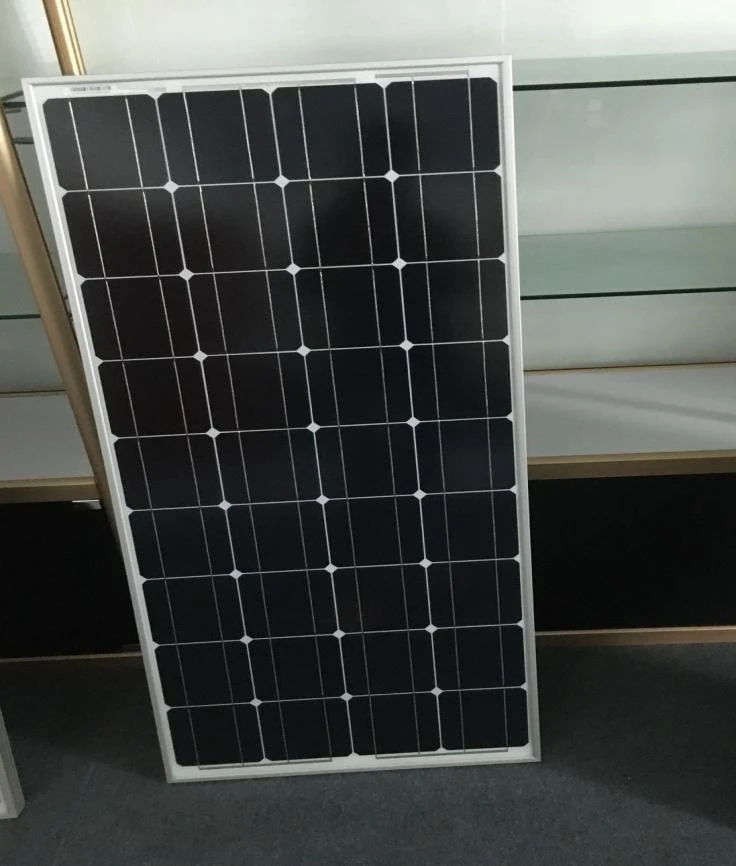
If you’re looking to test this for your own setup, or you need a quote for a bulk order, don’t hesitate to reach out. We do custom sizes too, so if you need a panel to fit a weirdly shaped roof or a boat deck, we can build that for you. No fine print, no hidden fees, just panels that work when you need them to, even when the sun’s not blasting.
Mini DIY Solar Panels REFERENCES
- Luque, A., & Hegedus, S. (2003). Handbook of Photovoltaic Science and Engineering. John Wiley & Sons.
- Green, M. A. (2020). Solar Cell Efficiency Tables (Version 56). Progress in Photovoltaics: Research and Applications.
- National Renewable Energy Laboratory (NREL). (2022). Photovoltaic Panel Performance in Low-Light Conditions. Technical Report NREL/TP-5400-81234.
- Campana, P. E., et al. (2021). Thin-Film vs. Crystalline Silicon Solar Panels: A Comparative Analysis for Off-Grid Applications in Temperate Climates. Renewable Energy, vol. 172, pp. 1122-1133.
Ningbo Xufeng Solar Energy Co., Ltd.
As one of the most professional flexible solar panel suppliers in China, our products have good reputation in the market. Please rest assured to buy bulk premium flexible solar panel in stock here from our factory. For price consultation, contact us.
Address: No.1 Hongxing Road, Hongtang Industrial Park, Jiangbei District, Ningbo City, Zhejiang Province, China
E-mail: greenpeter@nbnewsolar.com
WebSite: https://www.nb-newsolar.com/
