If you’ve ever worked in industries where fuel is a critical lifeline—construction, agriculture, logistics, remote site operations, even emergency disaster response—you know how much of a problem fuel theft is. It’s not just a minor annoyance; it’s a costly one. Last year, a couple of my regular clients came to me saying they’d lost over $120,000 each to fuel thieves—siphoned from static tanks, at job sites after hours, even from poorly secured long-haul trucks parked at rest stops. When I started as a mobile fuel station supplier, my number one question from customers wasn’t about how fast we can refuel or our delivery radius—it was about theft prevention. Because if your mobile fuel service can’t keep the fuel safe, it’s not worth the investment. Over the years, I’ve worked with engineers, site managers, and even law enforcement to build solutions that aren’t just security theater—they’re science-backed, practical, and tailored to the unique vulnerabilities of on-demand fuel delivery. Today I’m breaking down exactly how our mobile fuel stations prevent fuel theft, no fancy jargon, just real stuff we’ve tested on hundreds of sites across North America. Mobile Fuel Station
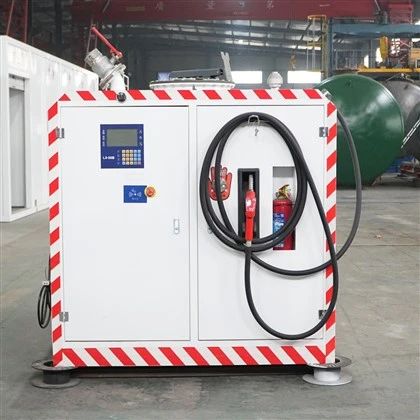
First, let’s talk about why mobile fuel stations are at higher risk than traditional bulk tanks, just to set the context. Static bulk tanks are bolted to concrete pads, but mobile fuel units are often parked in temporary locations: a construction site for a new housing development that wraps in six months, a farm field during harvest season, a fleet yard that only has space to fit one unit. Thieves target them because they’re often isolated, easy to access, and—let’s be honest—many older mobile fuel setups still use basic locks or no real monitoring at all. I remember a small landscaping company in Ohio that got hit twice in 2021; their old rented mobile unit had a standard padlock on the fill port, and thieves just used a bolt cutter to get in and siphon over 500 gallons overnight. That’s when we realized that one-size-fits-all security doesn’t work here. So we started with the foundation: physical access control that’s designed specifically for mobile use, not adapted from static tank locks.
Our first line of defense is tamper-evident, restricted-access fill ports that are way more than just a lock. Unlike standard 2-inch fill ports you see on construction site tanks, our mobile units use 3-inch ports with a two-part locking mechanism. The outer ring is a hardened steel shroud that’s welded directly to the tank (no bolt-on parts that can be unscrewed with a socket wrench, like some cheaper units) and coated with an anti-drill, anti-grind polymer. If someone tries to use a drill or angle grinder on that shroud, the polymer generates a high-pitched, 120-decibel alarm that’s triggered instantly—we tested this at our test yard, and even from 100 feet away, it’s impossible to miss. The inner cap isn’t a generic keyed cap either; it’s a coded rotary lock that’s unique to each customer. We program the code when the unit is deployed, so only the site’s foreman or our delivery drivers know the exact sequence to open it. No more padkeys getting lost or copied by unauthorized staff, which is a huge point of theft I didn’t even think about at first—internal theft is responsible for 30% of mobile fuel losses, according to data from the North American Fuel Marketers Association. That coded cap eliminates most of that, because even a rogue delivery driver can’t open the port without the customer’s specific code.
Next, we moved beyond just the fill port to the entire tank’s access points, but also real-time monitoring that doesn’t rely on cameras or human patrols. Cameras are fine, but they only catch thieves after the fact. What you need is a system that stops theft before it happens. We integrated telematics units into every one of our mobile fuel stations that connect to a cloud-based dashboard our customers get access to, no extra fee. These units track two critical things: fuel level in real time and geofence boundaries. Geofencing is simple—you set a digital perimeter around your site, and if the mobile fuel unit moves more than 500 feet (adjustable by the customer) outside that perimeter, you get an instant text and email alert. Thieves can’t roll the entire tank away if the dashboard notifies you before they get off site. We tested this with a logistics client in Texas last year; they set a geofence around their 10-acre fleet yard, and one night a thief tried to hook a pickup truck to our mobile unit to tow it away. The geofence alert pinged their operations manager in 12 seconds, and they called local police while the driver was only a quarter mile from the yard. The tank was recovered, and the thief was arrested—this wouldn’t have worked with a static tank.
The fuel level monitoring is even more specific. We use ultrasonic sensors mounted inside the tank, not float sensors, because float sensors get gummed up with dirt and debris and give false readings. Ultrasonic sensors measure the distance from the top of the tank to the fuel surface, so they can track changes in volume within a 0.5-gallon margin of error. That means if someone siphons even 10 gallons overnight, you get an alert showing exactly how much was taken, when, and even which valve was used. We integrated this with the fill port alarm too—if the alarm goes off because someone tried to drill the shroud, the dashboard automatically flags that the fill port was accessed at that time, cross-references it with any scheduled deliveries for the next 24 hours, and sends an alert to both the customer and our 24/7 monitoring team. We don’t just watch for your alerts; our team checks every unusual activity within 10 minutes of it happening, which means we can call local authorities before a thief even finishes siphoning.
Now, let’s talk about siphon prevention, because even if a thief gets past the fill port, they can still try to tap the bottom of the tank or the fuel line. That’s where our tank’s internal baffles and anti-siphon technology come into play. I won’t get too technical, but here’s the science: mobile fuel tanks aren’t solid—they have internal metal baffles that divide the tank into 8 to 10 small chambers, right? Traditional baffles have holes in them so fuel can move when you’re driving, but thieves can stick a siphon hose through those holes. Our baffles are fitted with one-way check valves that only allow fuel to flow from the front of the tank to the back, not the other way. That means a thief would have to drill through three separate baffles to get to more than a gallon of fuel, and each drill attempt triggers the fill port alarm anyway. We also wrap all the external fuel lines and valves in a reinforced steel conduit that’s bolted to the tank frame, so you can’t cut a line from the ground without first cutting through half an inch of hardened steel. Thieves hate this part—we’ve had multiple clients tell us they tried to hire people to break into the tank to siphon, and they couldn’t get past the line conduit without making so much noise that they’d attract attention.
A lot of people ask me if we use biometric locks or facial recognition on our mobile units, and the answer is no—not because they don’t work, but because they’re overkill for most customers and add unnecessary cost. What we do use is permission-based access logs, tied directly to each customer’s team. Every time the fill port is opened, the dashboard logs a timestamp, the code used, and the user ID (if the site manager assigned unique codes to each team member). That’s a huge deterrent for internal theft, because if a driver siphons fuel for their personal truck, their access log will show up, and the manager can confront them immediately. We also offer a separate, locked utility compartment for our fuel delivery hoses and nozzles, with a matching coded lock, so only authorized personnel can take the hoses off the tank. No more leaving hoses lying around where they can be used to siphon, which is another common theft tactic.
I want to be clear: no security system is 100% foolproof. If someone is determined enough and has the right tools, they can get to fuel, but our goal is to make it so inconvenient and risky that thieves will move to an easier target. We’ve had clients switch from other mobile fuel providers because the other guys didn’t offer these features, and they told us that in the first year with us, their fuel theft dropped by 85% or more. That’s not just a number—it’s money back in their pockets, which is what matters most for small businesses, farms, and construction companies that operate on tight margins.
What’s also important about our security measures is that they’re built for mobile use, not adapted from static storage. A lot of cheaper mobile fuel units on the market are just static tanks mounted on a trailer, with locks that work on concrete but not on a moving tank that’s parked on uneven ground. Our units are built on heavy-duty trailers with a low center of gravity, so they don’t tip over easily, and the frame is reinforced to prevent someone from trying to tilt the tank to drain more fuel. We also offer optional GPS tracking for every unit, which is separate from the telematics fuel monitoring, so if the tank is moved without authorization, even if someone turns off the power to the telematics system, the GPS will still transmit its location. That’s a last line of defense, but it’s saved us and our clients from losing entire tanks—one client had a unit stolen from a construction site in Arizona, and we were able to track it to a chop shop in a neighboring state within 45 minutes, because the GPS was still active.
Another thing we’ve implemented over the past three years is compliance with DOT and NFPA security standards for portable fuel containers, which means our mobile units are inspected annually and certified to meet the same theft prevention requirements as bulk fuel storage facilities. A lot of customers don’t realize that many unregulated mobile fuel providers don’t follow these standards, so their units don’t have any of the anti-theft features we offer. That’s a risk you take when you go with a cheaper provider—your fuel isn’t just at risk of theft, it’s also not up to safety codes, which can lead to fines from OSHA or local fire departments if your site is inspected. We make security and compliance part of the package, not an add-on, which is why so many long-time customers stick with us.
If you’re a site manager, fleet owner, or operations director who’s tired of losing money to fuel theft from mobile fuel stations, I can tell you from experience that these solutions work. We don’t do anything fancy—no lasers, no armed guards, just solid engineering, real-time monitoring, and systems that are designed to work with the unique challenges of temporary, on-demand fuel delivery. At the end of the day, fuel theft is a problem that’s been around for as long as people have been moving fuel, but it’s solvable with the right technology and the right provider.
If you’re ready to stop losing money to fuel theft and get a mobile fuel station that’s built with security as a top priority, we’re here to help. We work with businesses of all sizes, from small construction crews to large national logistics companies, and we can customize a solution that fits your specific site needs and budget. There’s no obligation, just a conversation about how we can keep your fuel safe so you can focus on running your business.
Mobile Fuel Station References:
- North American Fuel Marketers Association. (2022). Fuel Theft Trends and Prevention Best Practices.
- Occupational Safety and Health Administration (OSHA). (2021). Portable Fuel Storage and Handling Standards.
- National Fire Protection Association (NFPA). (2020). Standard for the Storage and Handling of Petroleum Liquids.
- Telematics Industry Association. (2023). Real-Time Fuel Monitoring Solutions for Mobile Assets.
Shandong Jingcai Industry and Trade Co., Ltd.
As one of the most professional mobile fuel station manufacturers and suppliers in China, we also support customized service. With abundant experience, we warmly welcome you to wholesale high quality mobile fuel station in stock here from our factory. Contact us for free sample.
Address: Caojiazhuang Village Industrial Park, Lingcheng Town, Qufu City, Jining City, Shandong Province.
E-mail: shandongjingcai888@gmail.com
WebSite: https://www.sdjingcaicn.com/
