Hey there! I’m a supplier of expanded metal, and I often get asked about how the weight of expanded metal varies with different materials and sizes. It’s a pretty interesting topic, so I thought I’d share some insights with you all. Expanded Metal

First off, let’s talk about the materials. Expanded metal can be made from a variety of materials, each with its own unique properties and weight characteristics. The most common materials are steel, aluminum, and stainless steel.
Steel is a popular choice for expanded metal because it’s strong, durable, and relatively inexpensive. The weight of steel expanded metal depends on the type of steel used. For example, mild steel is lighter than high – strength steel. Mild steel has a density of around 7.85 g/cm³. So, if you have a large sheet of mild – steel expanded metal, it’s going to be heavier compared to a smaller one. But when you compare it to high – strength steel, which has a higher carbon content and other alloying elements, the high – strength steel expanded metal will be heavier for the same size.
Aluminum, on the other hand, is much lighter than steel. Aluminum has a density of about 2.7 g/cm³. This means that for the same size and pattern of expanded metal, an aluminum one will weigh significantly less than a steel one. That’s why aluminum expanded metal is often used in applications where weight is a concern, like in aerospace or automotive industries. It’s also corrosion – resistant, which is a big plus.
Stainless steel is another option. It has a density similar to that of regular steel, around 7.93 g/cm³. But stainless steel is more corrosion – resistant due to the presence of chromium and other elements. So, if you need expanded metal for an outdoor or corrosive environment, stainless steel is a great choice. However, because of its alloying elements, it can be a bit more expensive than regular steel.
Now, let’s get into how size affects the weight. The size of expanded metal is determined by two main factors: the length and width of the sheet, and the mesh size or opening pattern.
When it comes to the length and width of the sheet, it’s pretty straightforward. The larger the sheet, the more material there is, and thus the heavier it will be. For example, a 4 – foot by 8 – foot sheet of expanded metal will weigh more than a 2 – foot by 4 – foot sheet, assuming they are made of the same material and have the same mesh size.
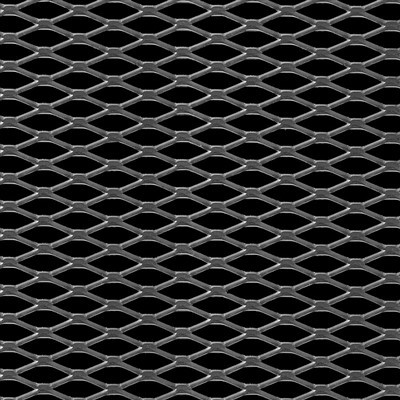
The mesh size also plays a crucial role. A smaller mesh size means there is more solid material in the expanded metal. For instance, an expanded metal with a 1/4 – inch mesh will have more metal per square foot than one with a 1 – inch mesh. So, the 1/4 – inch mesh expanded metal will be heavier, even if the sheets are the same size and made of the same material.
Let’s take a real – world example to illustrate this. Suppose we have two sheets of steel expanded metal, both 4 feet by 8 feet. One has a 1/2 – inch mesh, and the other has a 1 – inch mesh. The sheet with the 1/2 – inch mesh will have more steel in it because the openings are smaller, so it will weigh more.
Another aspect to consider is the thickness of the base material. A thicker base plate will result in a heavier expanded metal. For example, if we have two aluminum expanded metals with the same mesh size and dimensions, but one is made from a 1/8 – inch thick aluminum sheet and the other from a 1/16 – inch thick sheet, the one made from the 1/8 – inch thick sheet will weigh more.
In the manufacturing process, the way the expanded metal is produced can also have a minor impact on the weight. Sometimes, there might be some material loss during the expansion process, but this is usually negligible.
Now, why is it important to know how the weight varies with different materials and sizes? Well, for one, it helps in transportation. If you’re shipping a large quantity of expanded metal, the weight can affect the shipping cost. A lighter material like aluminum might be more cost – effective to ship over long distances.
It also matters in the installation process. Heavier expanded metal might require more support structures during installation. For example, if you’re using a large, heavy steel expanded metal for a flooring application, you’ll need to make sure the underlying structure can support the weight.
If you’re in the market for expanded metal, understanding these weight variations can help you make the right choice for your project. Whether you need a lightweight solution for a mobile application or a heavy – duty one for industrial use, we’ve got you covered.
We offer a wide range of expanded metal products in different materials, sizes, and mesh patterns. Our team of experts can help you select the best option based on your specific requirements. We pride ourselves on providing high – quality expanded metal at competitive prices.
If you’re interested in learning more about our products or getting a quote, don’t hesitate to reach out. We’re always happy to have a chat and discuss how our expanded metal can meet your needs. Whether you’re a small – scale contractor or a large – scale industrial client, we’re here to serve you.
So, if you’ve got a project that requires expanded metal, give us a call or drop us an email. Let’s work together to find the perfect solution for you.
Standard Expanded Metal References:
- "Metals Handbook", ASM International
- "Materials Science and Engineering: An Introduction", William D. Callister Jr. and David G. Rethwisch
Anping Yilida Metal Wire Mesh Co., Ltd.
Anping Yilida Metal Wire Mesh Co., Ltd. is one of the most reliable expanded metal manufacturers and suppliers in China, also supports customized service. Please feel free to buy bulk high quality expanded metal made in China here from our factory.
Address: Wire Mesh Development Zone, Anping, Hebei Province, China
E-mail: sales@wiremesh-yg.cn
WebSite: https://www.yilidametal.com/
