Hey there! I’m a supplier of forged valves, and today I wanna chat about the difference between forged and forged – welded valves. It’s something that a lot of folks in the industry often get confused about, so I thought I’d break it down in a simple way. Forged Valves
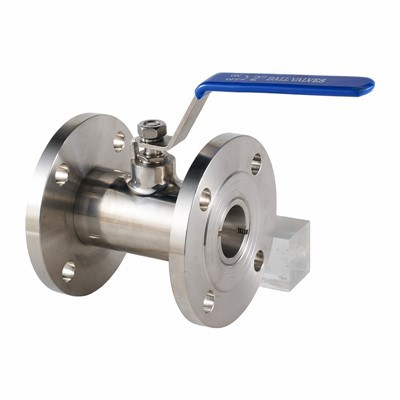
Let’s start with forged valves. Forging is a manufacturing process where metal is shaped by applying compressive forces. In the case of forged valves, a solid piece of metal, usually steel or other alloys, is heated to a malleable state and then hammered or pressed into the desired shape. This process gives the valve a really strong and uniform structure.
One of the big advantages of forged valves is their high strength. The forging process aligns the grain structure of the metal in a way that makes it more resistant to stress and cracking. This means that forged valves can handle high – pressure and high – temperature applications really well. For example, in oil and gas pipelines, where the pressure can be extremely high, forged valves are a popular choice because they can withstand the harsh conditions without failing.
Another great thing about forged valves is their dimensional accuracy. Since they are made from a single piece of metal, the dimensions are very precise. This ensures a good fit and proper sealing, which is crucial for preventing leaks. And when it comes to quality control, it’s relatively easier to inspect a forged valve because it’s a single, solid unit.
Now, let’s talk about forged – welded valves. As the name suggests, these valves are a combination of forging and welding processes. First, the individual components of the valve are forged separately. These components could be the body, bonnet, and other parts. Then, these forged parts are welded together to form the complete valve.
The main advantage of forged – welded valves is their flexibility in design. Since the components are forged separately, it’s easier to create complex shapes and designs. For instance, if you need a valve with a specific internal passageway or a unique connection type, forged – welded valves can be customized more easily than forged valves.
Another benefit is that forged – welded valves can be more cost – effective in some cases. When you’re dealing with large – scale production, it might be more economical to forge the components separately and then weld them together rather than forging the entire valve as a single piece. This is especially true for valves with larger sizes.
However, forged – welded valves also have some drawbacks. The welding process can introduce some potential weaknesses. If the welding is not done properly, there could be issues like weld defects, which can lead to leaks or failures over time. Also, inspecting a forged – welded valve is a bit more complicated because you have to check both the forged components and the welds.
In terms of application, forged valves are often preferred in applications where high strength and reliability are the top priorities. They are commonly used in industries such as petrochemical, power generation, and marine. On the other hand, forged – welded valves are more suitable for applications where design flexibility and cost – effectiveness are important. They are often used in general industrial applications, water treatment plants, and some less – critical pipeline systems.
Let’s look at some real – world examples to make it clearer. In a refinery, where the process involves high – pressure and high – temperature fluids, forged valves are usually used for the main pipelines. These valves need to be able to handle the extreme conditions and ensure the safety of the entire operation. But in a local water treatment plant, where the pressure and temperature are relatively lower, forged – welded valves might be a more practical choice because they can be customized to fit the specific requirements of the plant at a lower cost.
When it comes to choosing between forged and forged – welded valves, there are a few factors to consider. First, you need to think about the operating conditions. If the application involves high pressure, high temperature, or corrosive fluids, forged valves are probably the better option. Second, consider the design requirements. If you need a valve with a complex shape or a specific connection type, forged – welded valves might be more suitable. And of course, cost is also an important factor. You need to balance the performance and the cost to make the right decision.
As a supplier of forged valves, I’ve seen all kinds of situations where customers are trying to figure out which type of valve is best for their needs. And I’m here to help. Whether you’re in the oil and gas industry, power generation, or any other field that requires valves, I can provide you with the right information and products.
If you’re interested in learning more about forged valves or have any questions about the difference between forged and forged – welded valves, don’t hesitate to reach out. We can have a detailed discussion about your specific requirements, and I can offer you the best solutions. Whether you need a small – scale valve for a local project or a large – scale valve for an industrial application, I’ve got you covered.

So, if you’re in the market for forged valves or want to know more about the options available, feel free to contact me. Let’s have a chat and see how we can work together to meet your valve needs.
Ball Valve References:
- "Valve Handbook" by Cameron
- "Industrial Valves: Selection, Specification, and Sizing" by James E. Swearingen
Xiongxiang Valve Group Co., Ltd.
As one of the most professional forged valves manufacturers and suppliers in China, we’re featured by quality products and good price. Please rest assured to wholesale cheap forged valves for sale here from our factory. Contact us for more details.
Address: Building 1, No.306, 12th Binhai Road, Jinkai District, Wenzhou City, Zhejiang Province, China
E-mail: info@xiongxiangvalve.com.cn
WebSite: https://www.steelvalvegroup.com/
